

Reviewed · ART DECO WALKING TOURS
Award-winning Art Deco & History Walking Tour
Miami Beach was largely made by people, not nature. Biscayne Bay was once shallow swamp, and the glittering resort city grew from that unlikely base. This 150-minute South Beach walk connects that strange beginning with Art Deco hotels, Muhammad Ali’s first world heavyweight title, Miami Vice, and the darker tales of cocaine cowboys and murder.
I like the way Damian, also called Damien in some tour materials, treats architecture as part of the city’s social story rather than as pretty scenery. I also like the access to historic hotel lobbies and other semi-public spaces, plus the hand-crafted map you can use after the walk. The main drawback is the length: two and a half hours on foot may feel long if you want a quick introduction or have limited energy in Miami’s heat.
In This Review
- Key points to know before you book
- Why Miami Beach makes such a good walking tour
- Beginning at The Betsy Hotel in central South Beach
- Reading South Beach Art Deco one façade at a time
- The Great Depression and the city’s early evolution
- Segregation, Jewish history, and Cuban migration
- Miami’s darker chapters, from cocaine cowboys to Versace
- The Muhammad Ali connection and other surprising stories
- How the 150-minute pace feels
- Is the $49 price fair?
- Who should book this South Beach walk?
- Final call: book it if you want the story behind the color
- FAQ
- Where does the tour meet?
- How long does the walking tour last?
- How much does the experience cost?
- What architectural styles are covered?
- Is the tour offered in English?
- What is included in the tour?
- Can I cancel or pay later?
Key points to know before you book
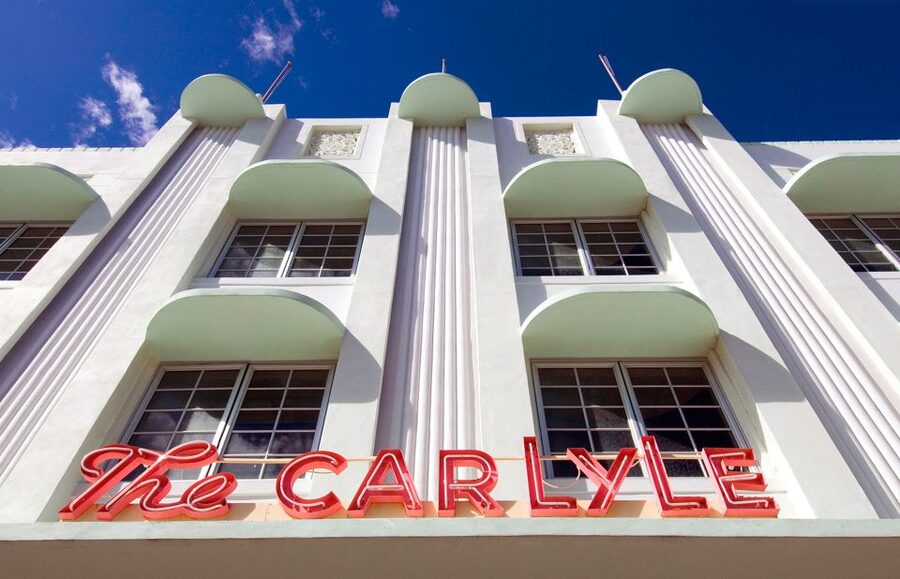
- Meet inside The Betsy Hotel: The tour begins in the lobby of this South Beach landmark, a useful central starting point for the Art Deco district.
- See more than Art Deco: The walk covers Art Deco, Mediterranean Revival, and MiMo architecture, so you learn how Miami Beach changed across several design eras.
- Expect a story-led tour: Damian brings together architecture, segregation, Jewish history, Cuban migration, organized crime, cinema, and local politics.
- Enter historic spaces: The experience includes hotel lobbies and other semi-public areas that you might pass without noticing on your own.
- The darker side is part of the route: True crime, scandals, the cocaine cowboys era, and the murder of Gianni Versace receive attention.
- Plan for a full morning or afternoon: The walk lasts 150 minutes, with availability depending on the date and starting time you select.
Why Miami Beach makes such a good walking tour
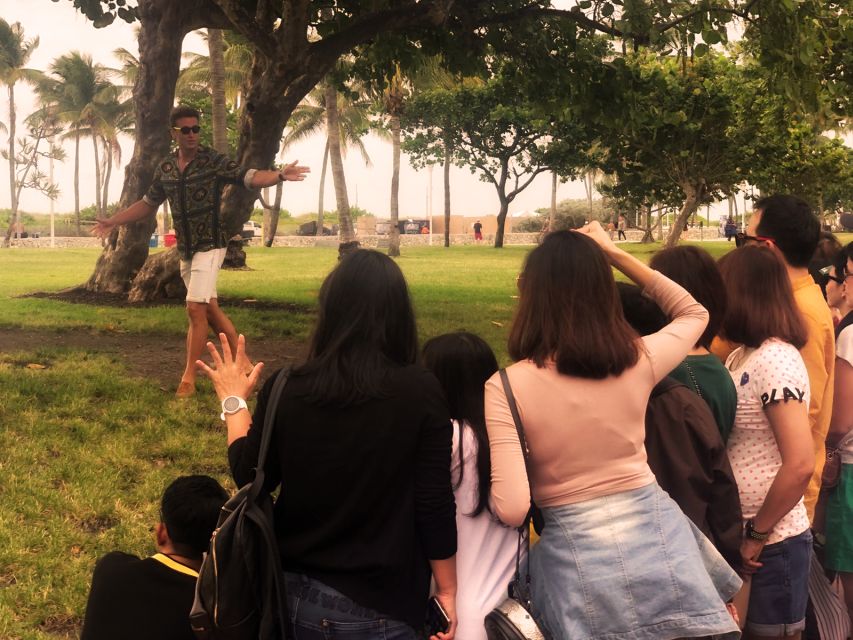
South Beach can seem easy to understand at first glance. You see pastel façades, curved corners, porthole windows, neon signs, and palm trees, then assume the story is mostly about sun and style. It is not.
The city’s origins are unusual. Miami Beach is largely man-made, and the bay that now frames a famous resort district was once a shallow wetland. That fact changes the way you see the streets. The hotels are not simply old buildings beside a beach. They are part of a carefully built resort machine that grew through land development, tourism, migration, racial exclusion, entertainment, and reinvention.
A walking guide can show you how those forces appear in the buildings. The low profiles and rounded edges of Art Deco reflect a particular design age, while Mediterranean Revival borrows from European forms to create a more romantic resort image. MiMo, or Miami Modern, brings a later period of playful shapes and postwar confidence.
I like this mix because it keeps the tour from becoming a parade of façades. You are learning how to read the city. Look at a building after the tour and you will have more questions: Who built it? Who stayed there? Who was excluded? What happened when the neighborhood fell out of fashion? What brought it back?
More Art Deco walks:
- The Official Art Deco Walking Tour by The Miami Design Preservation League
★ 5.0 · 1,580 reviews - Miami South Beach Art Deco Walking Tour
★ 5.0 · 1,039 reviews - Miami Beach Food and Art Deco Walking Tour
★ 4.5 · 245 reviews
Beginning at The Betsy Hotel in central South Beach
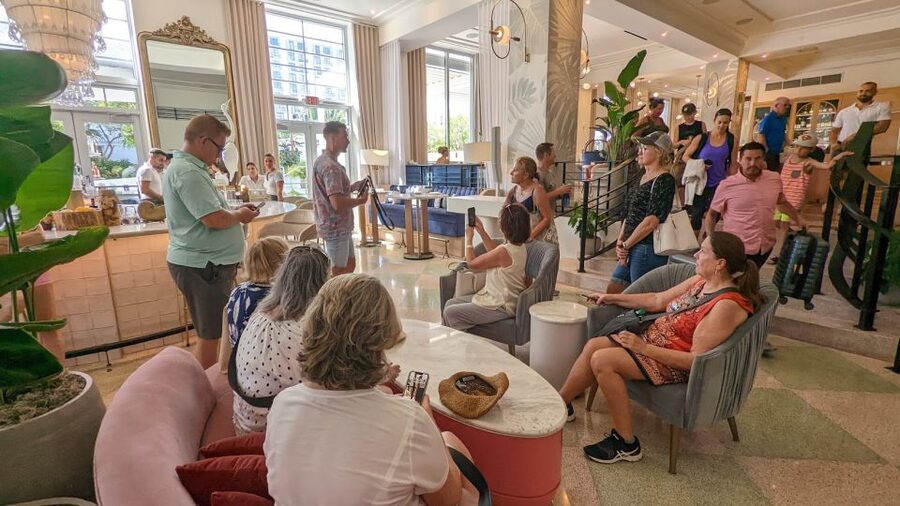
You meet your guide in The Betsy Hotel lobby. That is a more useful starting point than an anonymous street corner because the hotel itself helps set the tone. You begin among historic surroundings before stepping into the wider district.
Damian is a local historian and an active member of the Miami Design Preservation League, the group associated with protecting Miami Beach’s architectural character. His role in preservation gives the tour a clear purpose. He is not just pointing out old hotels. He is explaining why these places matter and why keeping them intact has taken effort.
Several people who took the tour found Damian organized, prompt, friendly, and easy to follow. That matters on a walking experience. A guide may know a great deal, but the useful skill is knowing how to turn facts into a clear story without losing the group.
The guide’s style is personal and energetic. He uses humor, answers questions, and can make design details understandable even if you have never studied architecture. That makes this a good choice if you want substance but do not want a technical lecture.
Reading South Beach Art Deco one façade at a time
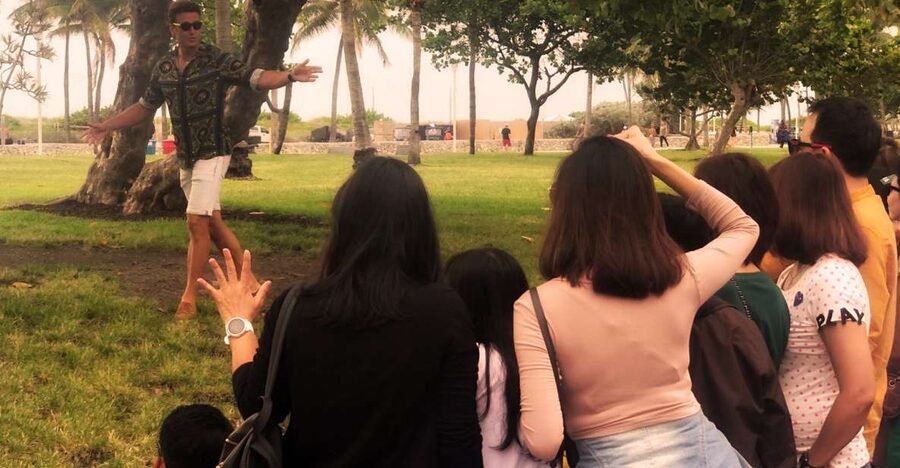
Art Deco is the main subject, but the tour does not treat it as a checklist of famous buildings. You are shown the details that help you identify the style: geometric decoration, symmetry, rounded corners, horizontal lines, stepped forms, and nautical touches.
Those details are easy to miss when you are walking toward the beach or searching for a café. A guide slows you down and directs your attention upward, across façades, and into entrances. The result is simple but useful: the district starts to look less like a row of colorful hotels and more like a collection of deliberate design choices.
The hotel lobbies are especially important. Exterior photos give you the broad picture, but interiors show how the resort experience was designed. The included access to historic lobbies and other semi-public spaces gives you a better sense of scale, decoration, and atmosphere.
The tour also covers Mediterranean Revival and MiMo. That wider scope is one of its strengths. If the walk only covered Art Deco, you might leave thinking Miami Beach stopped developing in the 1930s. Instead, you see how architectural taste shifted and how later buildings became part of the city’s identity.
The focus is not on memorizing architects or dates. It is on seeing the relationship between design and place. Miami’s buildings had to sell an idea of leisure, glamour, modernity, or escape. Once you understand that, even a modest hotel can tell you something.
The Great Depression and the city’s early evolution
Miami Beach’s story is not a straight rise from swamp to luxury resort. The tour places architecture within the city’s early growth and the strain of the Great Depression.
That context is valuable because Art Deco is often presented as a cheerful style floating free from real life. In Miami Beach, the period was tied to business pressures, tourism, land development, and the need to make a young city feel established. The buildings were compact, decorative, and designed to create an appealing experience for visitors.
You also hear about the city’s changing fortunes. The tour’s larger story helps explain why a district that once seemed dated later became worth preserving. Architectural preservation is not automatic. Buildings can be ignored, altered, or demolished when fashion changes.
Damian’s preservation work adds weight here. He can explain the difference between merely admiring old buildings and protecting a neighborhood’s character. You do not need to be an architecture fan to appreciate that lesson. It is really a lesson about what cities choose to keep.
More history walks near Miami:
- History Museum, Pioneer House Museum & Schoolhouse Museum
★ 5.0 · 439 reviews - Award-winning Art Deco & History Walking Tour in Miami Beach
★ 5.0 · 138 reviews - Miami Beach Art Deco & History Bike Tour with Design Enthusiast
★ 5.0 · 135 reviews - Food Tour of Historic West Palm Beach Neighborhoods
★ 5.0 · 112 reviews
Segregation, Jewish history, and Cuban migration
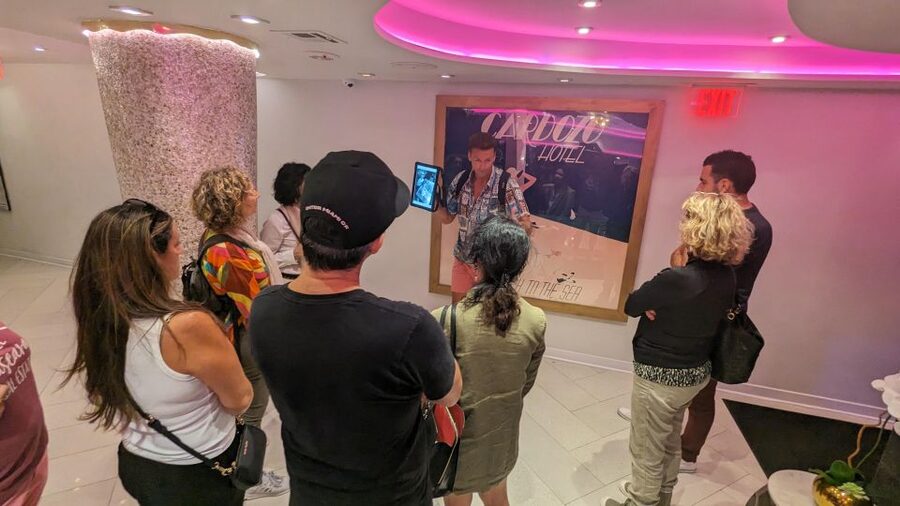
The polished resort image has a difficult side. The tour addresses segregation and the restrictions that shaped who could live, work, stay, or feel welcome in Miami Beach.
This part is essential. A tour that only celebrates pastel colors and celebrity stories would give you a shallow picture of the city. The history of exclusion helps explain why Miami Beach developed as it did and why its public image did not match everyone’s experience.
Jewish history is also included, along with Cuban migration. These subjects show Miami Beach as a place shaped by movement and community, not just by developers and hotel owners. The city’s identity grew through people arriving from different backgrounds, bringing languages, memories, businesses, faiths, and political experiences.
I appreciate that the tour links these themes to the streets you are walking. History feels more useful when it is attached to a building, lobby, neighborhood, or public space. You are not simply hearing a list of groups that passed through. You are learning how migration and exclusion changed the city.
The discussion can be serious, so this is not a purely lighthearted architecture walk. That balance is a strength for most people, though anyone wanting only design and photography may find the social history more than expected.
Miami’s darker chapters, from cocaine cowboys to Versace
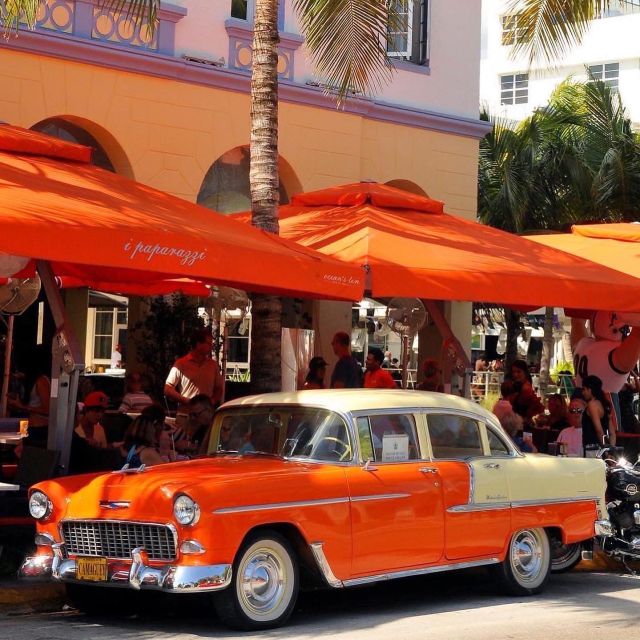
The tour also follows Miami Beach into its more notorious decades. You hear about the cocaine cowboys era, scandals, and true crime locations. These stories explain why Miami developed such a powerful image of danger, excess, and sudden wealth.
The value here is context. Crime stories can become cheap entertainment if they are told only for shock. On this walk, they form part of the city’s public memory and its changing reputation. Miami was not just a glamorous resort or a movie backdrop. It was also a place where money, nightlife, organized crime, and media attention collided.
The murder of Gianni Versace receives specific attention. His former home is one of the most recognizable places in South Beach, but the story around it is darker than the building’s ornate appearance suggests. Connecting the location to the wider story of Miami’s celebrity culture makes the stop more meaningful than a quick photo opportunity.
This is also where the tour’s film connections fit naturally. You learn about locations associated with Miami Vice, Scarface, and The Birdcage. These productions helped turn Miami into a character of its own, using the city’s colors, streets, hotels, and nightlife as visual shorthand.
I like the way film locations can serve as a bridge between popular culture and real history. You may arrive knowing Miami through television and movies. The walk shows you what those images captured, what they simplified, and how they helped shape the city’s reputation.
The Muhammad Ali connection and other surprising stories
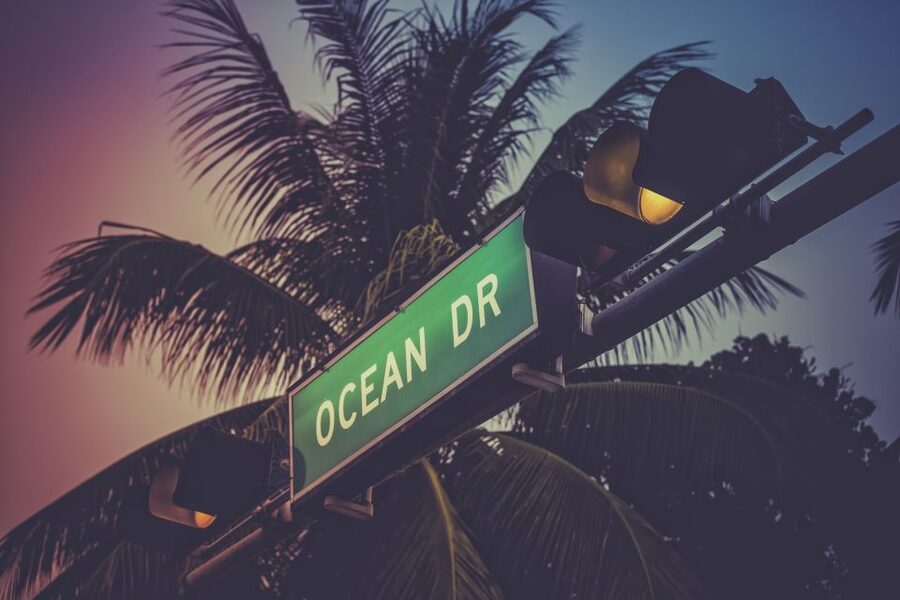
One of the tour’s memorable historical details is that Muhammad Ali became world boxing champion for the first time in Miami Beach. That fact gives the city another layer. South Beach was not only a resort setting for celebrities and holidaymakers. It was also a stage for major sporting and cultural events.
Stories like this keep the walk moving. You shift from architecture to sport, from migration to crime, then back to design. The city begins to feel less like a themed district and more like a place where unrelated lives and events crossed paths.
The guide also points out places that are easy to overlook. No exact list of stops is fixed in the information provided, and that is sensible for a walking tour that uses hotel interiors and semi-public areas. The important thing is to expect a route built around significant buildings, stories, and views rather than a rigid museum sequence.
Bring your curiosity. The best moments may be small: a detail above a doorway, a lobby you would have walked past, or a connection between a building and a film you know.
How the 150-minute pace feels
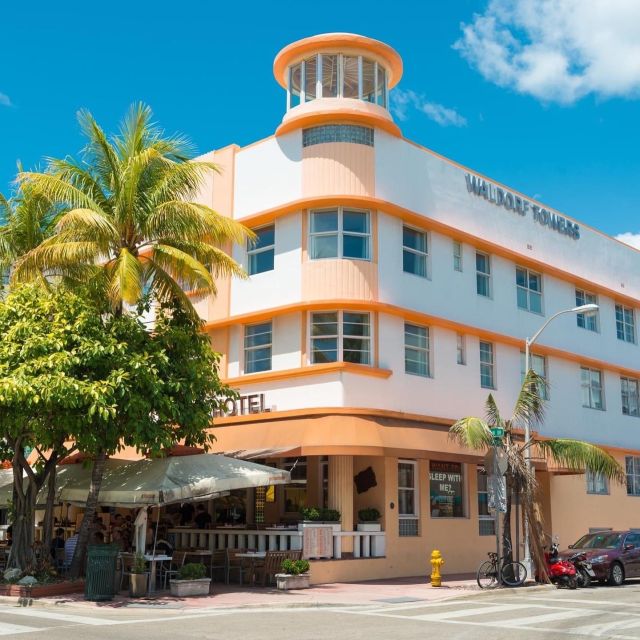
Two and a half hours gives the guide room to connect architecture with history. You are not rushing from one photo stop to the next. The extended format is particularly useful for people who want to understand the district rather than simply identify Art Deco buildings.
Still, the length deserves honest attention. One person who enjoyed the tour felt that two hours would have been enough. That is a fair concern, especially if you are visiting in hot weather, have mobility limits, or have several other plans in the same morning.
The walk takes place outdoors, with time spent inside selected historic spaces. Wear comfortable shoes, carry water, and avoid scheduling a tight appointment immediately afterward. Starting promptly helps, but you should still allow extra time for the full experience.
The tour is offered in English with a live guide. There is no indication of a large coach or transport between stops, so you should think of this as a proper city walk. If you prefer a quick overview from an air-conditioned vehicle, choose a different format.
Is the $49 price fair?
At $49 per person, this is not the cheapest way to see South Beach façades. You can walk Ocean Drive on your own for free. The question is what you gain from paying.
Here, the price covers a live local historian, preservation-focused commentary, access to selected hotel interiors and semi-public spaces, film-location context, and a personally prepared guide map. You are paying for interpretation and access, not just transportation.
I consider that fair value if you care about architecture, city history, or local stories. A self-guided walk can show you the buildings, but it may not explain the connections between the Great Depression, segregation, migration, television, crime, and preservation. You also may not know which lobbies or interior areas are worth entering.
The tour is less good value if you only want a short photo walk or have no interest in historical detail. It is also a poor fit if you dislike stories about crime, scandal, or discrimination. For someone with only a short stay in Miami Beach, though, it offers a lot of context in one session.
You can reserve now and pay later, and cancellation is free up to 24 hours before the tour for a full refund. Those terms help if your Miami plans are still shifting.
Who should book this South Beach walk?
I would recommend it to first-time visitors who want to understand Miami Beach beyond beaches and nightlife. It also suits returning visitors who have photographed the Art Deco district before but never learned how its buildings and communities fit together.
Architecture students, design fans, film lovers, and history-minded families should find plenty to discuss. The guide’s humor and clear explanations make the subject accessible, so you do not need specialist knowledge.
It is also a good early activity in your stay. After the walk, you can revisit South Beach with a sharper eye. You will notice the difference between Art Deco and MiMo, pay attention to entrances and details, and understand why preservation matters.
I would hesitate to recommend it to anyone seeking a brief, low-effort orientation. The tour is long enough to require attention, and the subject matter ranges well beyond pretty buildings. It is also conducted in English only.
Final call: book it if you want the story behind the color
Book this tour if you want Miami Beach explained by someone who cares about its buildings and its past. Damian’s enthusiasm, local ties, storytelling, and ability to make architectural details approachable are central to the experience.
The strongest reason to go is the balance. You get Art Deco, Mediterranean Revival, and MiMo, but also segregation, Jewish history, Cuban migration, crime, film, and preservation. The main caution is the 150-minute walking time. If that suits your schedule and stamina, $49 buys much more than a stroll along Ocean Drive.
FAQ
Where does the tour meet?
The meeting point is the lobby of The Betsy Hotel in Miami Beach.
How long does the walking tour last?
The tour lasts 150 minutes, or two and a half hours.
How much does the experience cost?
The price is $49 per person.
What architectural styles are covered?
The tour covers Art Deco, Mediterranean Revival, and MiMo, or Miami Modern, architecture.
Is the tour offered in English?
Yes. The experience includes a live English-speaking tour guide.
What is included in the tour?
The price includes a guided walk with a local historian and preservationist, access to historic hotel lobbies and other semi-public spaces, film-location information, and a guide map prepared by the host.
Can I cancel or pay later?
You can cancel up to 24 hours in advance for a full refund. You can also reserve now and pay later.
More Walking Tours in Miami
- Little Havana Food and Walking Tour in Miami
★ 5.0 · 8,882 reviews - South Beach Cultural Food and Walking Tour
★ 5.0 · 1,284 reviews - Miami: Little Havana Food Walking Tour with Tastings
★ 4.9 · 1,181 reviews - Little Havana: Authentic Food and Culture Walking Tour
★ 5.0 · 679 reviews
Fresh reviews out of Miami
- Miami’s Best Views: Private Boat Tour★ 5.0 · 3 reviews
- Jetcar Experiences★ 5.0 · 3 reviews
- Palm Beach Tour from Miami – Flagler’s Museum + Hotel Breakers★ 5.0 · 3 reviews
- Miami: Private Yacht Rental Tour with Dolphins and Snorkel★ 4.9 · 3 reviews
- Hollywood Meets Miami Beach Movie and Tasting Tour★ 5.0 · 3 reviews
- Miami: Everglades National Park Hiking and Kayaking Day Trip★ 5.0 · 3 reviews
- Miami: 30-Minute Private Helicopter Tour with Champagne★ 5.0 · 3 reviews
- Little Havana French Gourmet Guided Tour★ 5.0 · 3 reviews
Art Deco Walking Tours, compared.
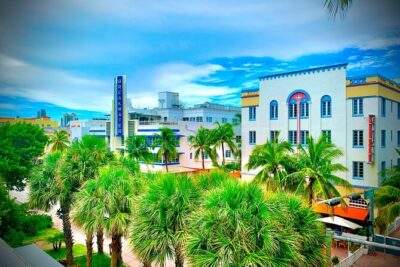
The Official Art Deco Walking Tour by The Miami Design Preservation League
Read our review →

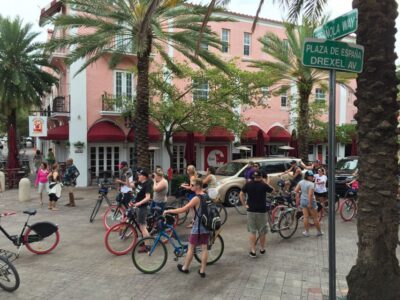
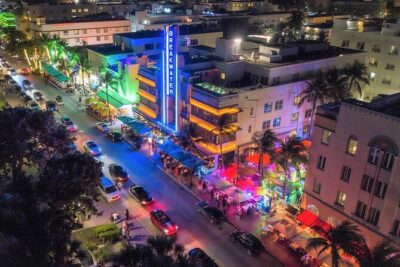
Award-winning Art Deco & Neon Lights Walking Tour in Miami Beach
Read our review →
Award-winning Art Deco & History Walking Tour in Miami Beach
Read our review →Browse the lists this tour appears in