
Reviewed · HISTORICAL TOURS
Miami Cocaine Capital in the 80’s- History tour-
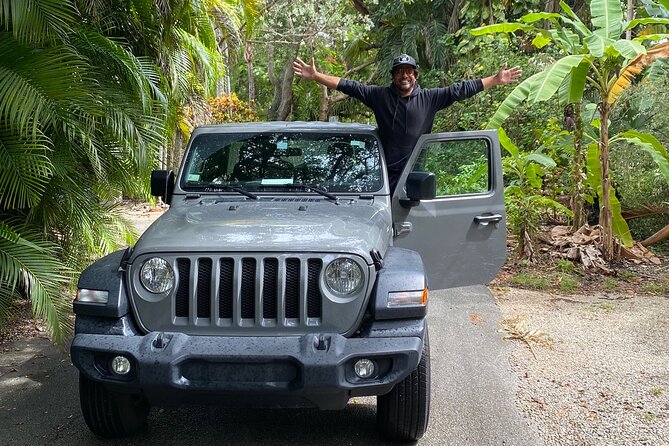
Miami’s cocaine era comes into focus from a convertible Jeep, with Coconut Grove as the main stage. You’ll connect Miami’s skyline, luxury homes, marinas, speedboats, and the former Mutiny Hotel to the money and people behind the city’s notorious early 1980s boom.
I like the private four-person limit, which keeps the ride personal and makes the $75 group price appealing. I also like the mix of serious history and odd local details, from armored cash trucks to free-roaming peacocks.
The tradeoff is time. At about one hour, this is a brisk drive-by tour rather than a museum visit or a long walking program. You’ll see places from the vehicle, not tour their interiors, and there is no bathroom included.
In This Review
- Key points to know
- Miami’s cocaine story begins with money
- A convertible Jeep changes the feel of the ride
- Vizcaya gives the story a different kind of drama
- Coconut Grove reveals the city behind the headlines
- The marinas explain how cocaine moved
- Miami City Hall has an unexpected aviation past
- The Mutiny Hotel is the tour’s strongest stop
- Is $75 a fair price for this Miami tour?
- Who should book the Cocaine Capital tour?
- Should you book it?
- FAQ
- How long is the Miami Cocaine Capital history tour?
- How much does the tour cost?
- Where does the tour begin?
- Where does the tour end?
- Is this a private tour?
- What vehicle is used?
- Is a guide included?
- Is bottled water provided?
- Is there a bathroom included?
Key points to know
- The Mutiny Hotel is the main event: Hear how this Coconut Grove hotel became a meeting place for drug dealers, celebrities, spies, politicians, informants, and police.
- A private Jeep makes the price work: The $75 rate covers up to four people, not each person separately.
- Coconut Grove supplies the setting: Marinas, luxury homes, sailboats, and peacocks add color to the story.
- The tour links crime to real estate: Miami’s building boom helped absorb vast sums of money during the 1970s and 1980s.
- Vizcaya adds a useful contrast: You pass a grand European-style estate with its own tale of a major art and jewelry theft.
- Weather matters: The open convertible format depends on good conditions, and cancellation is free up to 24 hours before departure.
Miami’s cocaine story begins with money
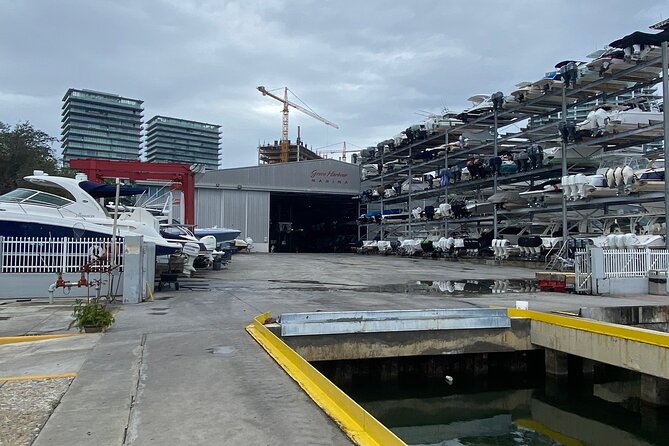
This tour is less about crime scenes than about how illicit cash changed a city. From the back of a convertible Jeep, you look toward Miami’s skyline while hearing how drug money moved into real estate, one of the city’s most important industries.
The figures help explain the scale. Real estate generated about $9 billion a year, while the drug trade was estimated to bring roughly $12 billion into the local economy. Those numbers are not just financial trivia. They show why Miami’s construction, luxury property market, nightlife, hotels, and waterfront culture became tied to the cocaine trade.
I like this opening because it gives you a framework before the tour reaches Coconut Grove. You are not simply passing expensive buildings and pretty water. You are being asked to consider who had the money to buy them, where that money came from, and how quickly a city can absorb cash without asking too many questions.
The skyline view also helps place the story in modern Miami. You see the polished result of decades of growth while learning about the rougher forces that helped drive it. Since the tour lasts only an hour, the guide has to keep moving, but this opening provides a useful starting point.
More history walks near Miami:
- History Museum, Pioneer House Museum & Schoolhouse Museum
★ 5.0 · 439 reviews - Award-winning Art Deco & History Walking Tour in Miami Beach
★ 5.0 · 138 reviews - Miami Beach Art Deco & History Bike Tour with Design Enthusiast
★ 5.0 · 135 reviews
A convertible Jeep changes the feel of the ride
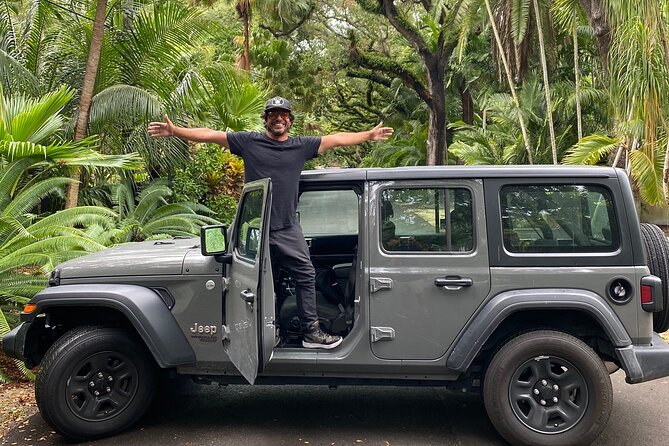
The vehicle is part of the experience, not just transportation. A convertible Jeep gives you open-air views and a better sense of Miami’s waterfront roads, though the format also leaves you exposed to sun and rain.
The tour is private, with a maximum of four people per car. That is a major advantage if you are traveling as a couple, family, or small group of friends. You do not have to share the guide’s attention with a large busload, and the $75 price is charged per group, making the cost especially reasonable when divided among four people.
You can also use the Jeep’s Bluetooth system to play your own music. That is a small feature, but it gives the ride a more relaxed, personal tone. Keep the volume low enough to hear the guide, since the stories are the reason to book the tour.
Bottled water is included. There is no bathroom included, so plan accordingly before meeting at David T. Kennedy Park. The activity begins and ends at the park, at 2400 South Bayshore Drive, and the meeting point is near public transportation.
Vizcaya gives the story a different kind of drama
On the way toward Coconut Grove, you pass Vizcaya Museum and Gardens. The estate faces Biscayne Bay and was built with a grand European style that feels far removed from speedboats, drug cash, and Miami’s hard-edged 1980s reputation.
You do not enter Vizcaya on this tour, so you should not book it as a substitute for a museum visit. Still, seeing the property from the route adds an important contrast. Miami’s wealth did not begin with cocaine. The city had long attracted people who wanted grand homes, waterfront views, imported style, and a private world behind gates.
Vizcaya also carries its own crime story. In 1971, three men from New York stole about $1.5 million in art, jewelry, and collectibles from the estate. They were caught in New York three days later, but only a small portion of the stolen goods returned to Vizcaya.
That story fits the tour’s larger theme: Miami’s beauty and wealth have always drawn people who wanted to possess them. The stop works best as a passing reference, not a full historical visit. If Vizcaya is high on your list, set aside separate time to tour the museum and gardens.
Coconut Grove reveals the city behind the headlines
Coconut Grove, often called The Grove, is the heart of the route. Its marinas, upscale homes, elegant hotels, and waterfront setting made it a natural base for people who wanted privacy, access to boats, and a polished social scene.
As you drive through the area, the guide connects the neighborhood to Miami’s 1980s drug war. You learn how luxury property and the boating world fit into the era. This is where the tour feels most specific. Instead of discussing the cocaine trade as an abstract national story, you see the roads and districts where the money became visible.
The Grove is also known for its peacocks, which roam freely in the area. Their bright colors and broad tails add a strangely cheerful note to a story filled with murder, corruption, and smuggling. You might see them during the drive, but a sighting cannot be guaranteed.
I like this mix of local character and darker history. The peacocks keep the route from feeling like a grim lecture, while the homes and marinas show how ordinary-looking places can carry complicated stories. The one limitation is that much of the area is viewed from the vehicle. You get context and atmosphere, but not a long chance to explore on foot.
A few more Miami bookings worth a look
- Little Havana Food and Walking Tour in Miami
★ 5.0 · 8,882 reviews - From Miami: Everglades Airboat, Wildlife Show & Bus Transfer
★ 4.2 · 8,622 reviews - Miami: Biscayne Bay Millionaire’s Homes Sightseeing Cruise
★ 4.5 · 7,348 reviews - Miami: Everglades National Park Airboat Tour & Wildlife Show
★ 4.5 · 7,296 reviews
The marinas explain how cocaine moved
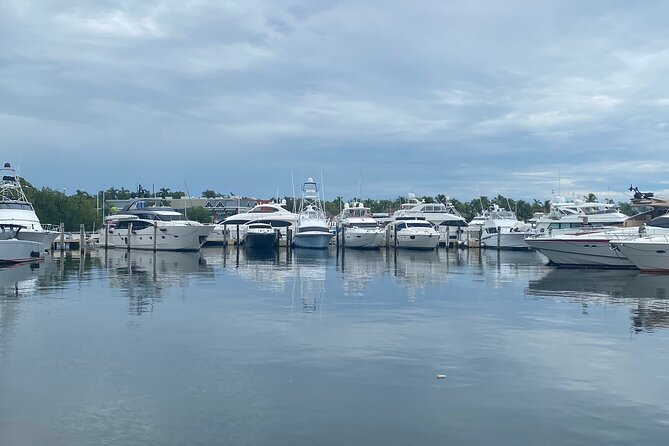
One of the most useful parts of the tour is the look at Coconut Grove’s marinas. The water was not just scenery. It provided routes for moving drugs and an escape path when law enforcement closed in.
The guide discusses cigarette boats and other fast vessels used by smugglers. These boats could outrun the typical patrol craft used by the Coast Guard, making them effective tools for drug runners. The tour also connects this practice to the Prohibition era, when boats were used illegally to transport alcohol.
That comparison gives you a broader view of Miami’s smuggling culture. The equipment and routes changed, but the basic advantages of the coastline remained: water access, speed, hidden transfers, and the chance to disappear into a maze of boats and channels.
Do not expect to board a cigarette boat or inspect a marina from inside. The stop is about seeing the waterfront and understanding its role in the story. For anyone interested in how the trade operated, this is more useful than simply hearing a list of notorious names.
Miami City Hall has an unexpected aviation past
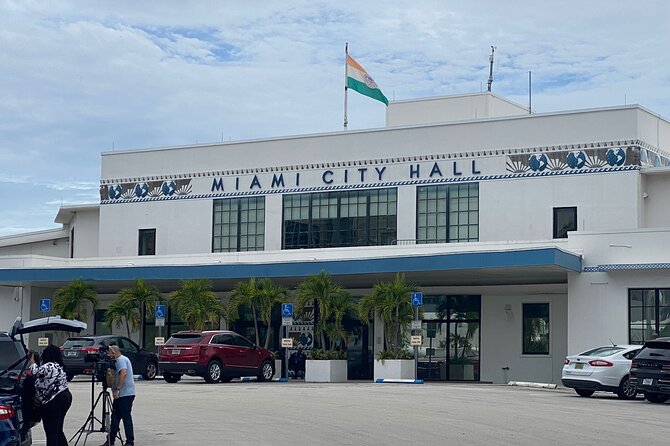
On the way to the Mutiny, the Jeep passes Miami City Hall at Dinner Key. The building was constructed in 1934 by Pan American Airlines as a flying-boat terminal for worldwide service.
The city bought it in 1946. After a short period as Jackie Heller’s Dinner Key Terrace restaurant, the building became Miami City Hall in 1954.
This is a short historical aside, but it adds texture to the route. Miami’s waterfront was once tied to ambitious air travel before it became known for luxury condos, marinas, and the cocaine trade. The building’s changing uses also reflect the city’s habit of reinventing its waterfront spaces.
You will not stop for a full architectural visit, so treat this as a bonus fact rather than a central part of the tour. It helps break up the drive and reminds you that Miami’s identity has never been fixed.
The Mutiny Hotel is the tour’s strongest stop
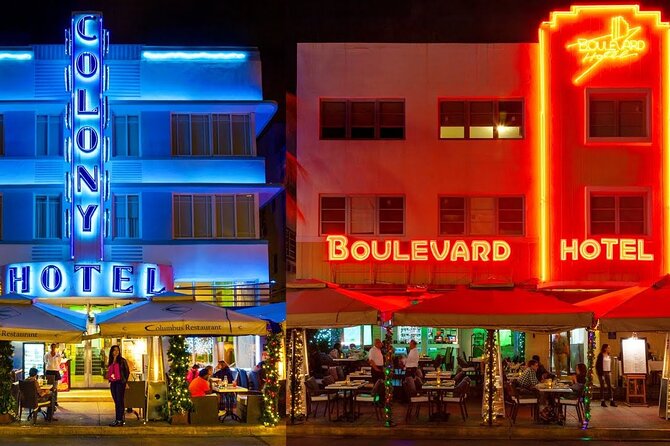
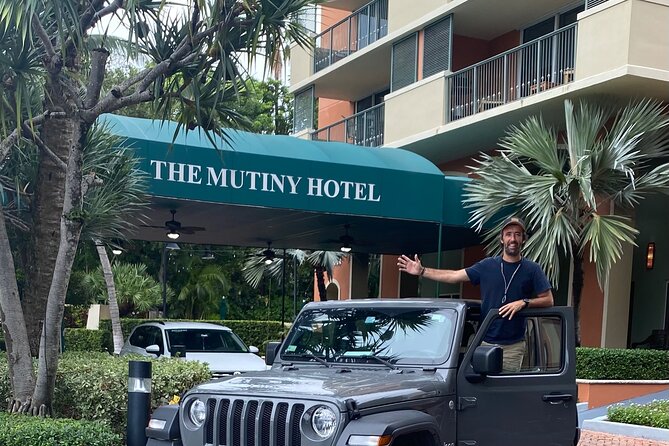
The former Mutiny Hotel in Coconut Grove is the clearest symbol of Miami’s cocaine heyday. The hotel became a favored gathering place for drug dealers and celebrities, along with crooked politicians, spies, informants, and police officers on both sides of the law.
The stories attached to the hotel capture the era’s mix of glamour and danger. It was described as a mecca for cocaine kingpins and was reportedly one of the country’s most profitable hotels. It was often overbooked, and armored trucks carried away sacks of cash from its business.
The champagne detail is especially memorable. The Mutiny reportedly sold more bottles of Dom Pérignon than any other establishment in the world. That fact shows how drug money changed the scale of ordinary luxury. This was not just a matter of people spending a little extra at the bar. It was a system built around enormous sums, status, access, and fear.
The hotel is not presented as a museum with preserved rooms or exhibits. You hear its stories while viewing the location from the tour route. That means the guide’s storytelling matters a great deal. The available information does not provide a guide’s name, so you should focus your expectations on the place-based narrative rather than a particular presenter.
For me, the Mutiny makes the tour worthwhile. It gives the entire drive a destination and ties together the money, nightlife, boats, celebrities, and law enforcement threads introduced earlier.
Is $75 a fair price for this Miami tour?
At $75 per group of up to four, the value is strong if you fill the Jeep. Four people pay less than $19 each before any additional booking charges. Even two people pay $37.50 each for a private ride and guide, which compares well with many short private sightseeing experiences.
The value depends on what you want. You are paying for a focused history story, transport between several Coconut Grove points, a convertible Jeep, bottled water, and a private group format. You are not paying for admission to Vizcaya, entry to the Mutiny, a boat ride, food, or a bathroom stop.
The one-hour length is both a benefit and a limit. It fits easily into a day that includes other Miami plans, and the short format works well if you want an introduction to the subject. If you want extensive detail about the drug war, law enforcement, individual kingpins, or Miami’s political history, one hour will feel quick.
The experience has a 4.6 rating from 10 reviews, with 90 percent recommended. The strongest praise centers on seeing highlights of old Miami, hearing fun facts, and enjoying a pleasant guide. That matches the tour’s real appeal: it offers a compact way to connect familiar Miami sights with a less polished chapter of the city’s past.
Who should book the Cocaine Capital tour?
I would choose this tour if you have an interest in 1980s Miami, organized crime, drug history, real estate, waterfront development, or the cultural background behind movies and television about the era.
It also suits first-time visitors who want to see Coconut Grove without committing to a long walking tour. The small private format is useful for couples and families who prefer their own vehicle and guide. The open Jeep can also make the outing feel more like a local drive than a standard sightseeing transfer.
You may want to skip it if you need a fully indoors activity, dislike open vehicles, or want to enter the attractions along the route. It is also not the right choice for someone seeking a broad overview of all Miami history. The focus is narrow by design, with the early 1980s cocaine trade at the center.
Book with the weather in mind. You can cancel for a full refund up to 24 hours before the start time. Changes or cancellations inside 24 hours are not accepted for a refund, and poor weather can lead to a rescheduled tour or full refund. The experience also requires a minimum number of participants, so a cancellation for that reason brings the same choice of a new date, another experience, or a refund.
Should you book it?
Book this tour if you want a quick, private, story-led look at the Miami neighborhoods connected to the cocaine boom. The Mutiny Hotel stories, the marina connections, and the real estate discussion give the hour a clear purpose, while Vizcaya, City Hall, and the peacocks keep the drive varied.
Skip it if you expect entry into historic buildings, a long walking route, or detailed evidence presented in a museum setting. For most people who enjoy unusual city history, the $75 group price makes this an easy add-on, especially when four people share the Jeep.
FAQ
How long is the Miami Cocaine Capital history tour?
The tour lasts approximately one hour.
How much does the tour cost?
The price is $75 per group of up to four people.
Where does the tour begin?
It begins at David T. Kennedy Park, 2400 South Bayshore Drive, Miami, Florida 33133.
Where does the tour end?
The activity ends back at the meeting point at David T. Kennedy Park.
Is this a private tour?
Yes. Only your group participates, with a maximum of four people per car.
What vehicle is used?
The tour uses a convertible Jeep.
Is a guide included?
Yes. A driver-guide is included.
Is bottled water provided?
Yes. Bottled water is included, and the Jeep also has Bluetooth for your own music.
Is there a bathroom included?
No. A bathroom is not included, so plan ahead before the tour begins.
Fresh reviews out of Miami
- Jetcar Experiences★ 5.0 · 3 reviews
- Palm Beach Tour from Miami – Flagler’s Museum + Hotel Breakers★ 5.0 · 3 reviews
- Miami’s Best Views: Private Boat Tour★ 5.0 · 3 reviews
- Miami: Private Yacht Rental Tour with Dolphins and Snorkel★ 4.9 · 3 reviews
- Hollywood Meets Miami Beach Movie and Tasting Tour★ 5.0 · 3 reviews
- Miami: Everglades National Park Hiking and Kayaking Day Trip★ 5.0 · 3 reviews
- Miami: 30-Minute Private Helicopter Tour with Champagne★ 5.0 · 3 reviews
- Little Havana French Gourmet Guided Tour★ 5.0 · 3 reviews
Historical Tours, compared.
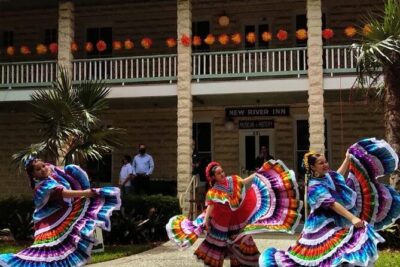
History Museum, Pioneer House Museum & Schoolhouse Museum
Read our review →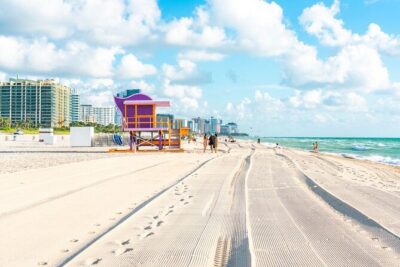
Award-winning Art Deco & History Walking Tour in Miami Beach
Read our review →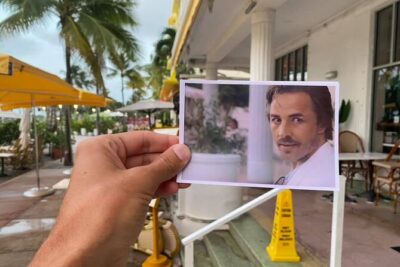
Miami Beach Art Deco & History Bike Tour with Design Enthusiast
Read our review →
Food Tour of Historic West Palm Beach Neighborhoods
Read our review →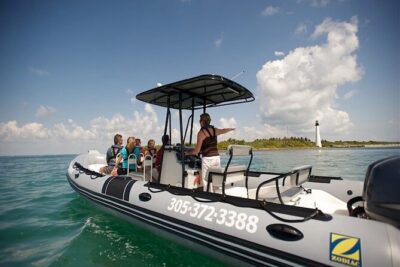
Miami Small Group Boat Tour: History, Wildlife, and Stiltsville
Read our review →
Fort Lauderdale History and Sightseeing Tour on Electric Bike(s)
Read our review →
Browse the lists this tour appears in