
Reviewed · HISTORICAL TOURS
Miami: History through Architecture Private Tour with Transport
Miami makes more sense when you see its neighborhoods as chapters in one fast-moving story. This private tour links South Beach’s Art Deco streets, Wynwood’s changing wall art, Brickell’s financial center, Coconut Grove, and Coral Gables, while your guide explains how Miami grew from a small settlement into a city shaped by migration, design, trade, and water.
I like the private format, since you can ask about the places that interest you instead of following a fixed group script. I also like the hotel or port transport, especially if you are short on time or visiting Miami between cruise and flight connections. The main consideration is pace: four hours covers a great deal of ground, but many stops are brief or drive-bys rather than long visits inside museums or landmarks.
In This Review
- Key points
- Why this tour works as a first look at Miami
- South Beach, from Ocean Drive to the Holocaust Memorial
- Wynwood and the change from graffiti to gallery-quality art
- Downtown sights around Museum Park and Biscayne Bay
- Brickell Avenue Bridge and Miami Circle
- Causeway views and the ecology of the bay
- Coconut Grove, Vizcaya, and the quieter side of the city
- Coral Gables, from waterways to Miracle Mile
- What the private vehicle adds
- Is $293 per person a fair price?
- Who should book this four-hour experience?
- Cancellation and booking details
- Should you book it?
- FAQ
- How long does the Miami architecture tour last?
- Is this a private tour?
- Is hotel pickup included?
- Can I be picked up at the airport or cruise port?
- What type of vehicle is used?
- Are food and drinks included?
- What is the cancellation policy?
Key points
- South Beach in one compact visit: See Ocean Drive, pass the Versace Mansion, and make short stops at the post office and Holocaust Memorial.
- Wynwood beyond the famous walls: Your guide takes you toward the edges of the district to explain its shift from graffiti to museum-quality street art.
- A private guide who follows your questions: Jon has been praised for discussing Miami geography, Cuban immigration, art, environmental issues, and marine life in Biscayne Bay.
- A citywide view in four hours: The route connects Miami Beach, downtown, Brickell, Coconut Grove, and Coral Gables without asking you to arrange several separate rides.
- Transport for small and medium groups: Groups of up to four use a full-size SUV or a four-door or soft-top Jeep Wrangler, subject to availability. Groups of five to twelve use a full-size SUV or passenger van.
- Useful for cruise and hotel visitors: Pickup and drop-off are available from selected hotels and Miami port, with special arrangements needed for airport and cruise ship pickups.
Why this tour works as a first look at Miami
Miami is not one city in the usual sightseeing sense. It is a collection of districts with different origins, styles, and rhythms. South Beach is known for pastel façades and nightlife. Brickell is a business center. Wynwood is tied to public art and cultural change. Coconut Grove and Coral Gables offer older residential and civic settings.
That makes a private vehicle tour useful. You are not spending your first day figuring out which neighborhoods connect by public transport or waiting for separate rides. Instead, you get a broad introduction and can decide where to return later.
The guide-led format matters here. Buildings can look attractive without telling you much. A guide can point out how architecture reflects Miami’s growth, how Cuban immigration shaped the city, and how the waterfront affects daily life. The experience is less about checking off famous addresses and more about understanding why the city looks and feels so different from one district to the next.
You should think of this as an overview, not a series of long museum visits. The tour lasts about four hours, and the schedule includes several short stops plus many drive-bys. If you want detailed time at Vizcaya, the Holocaust Memorial, or the museums around Museum Park, you will need separate visits.
More history walks near Miami:
- History Museum, Pioneer House Museum & Schoolhouse Museum
★ 5.0 · 439 reviews - Award-winning Art Deco & History Walking Tour in Miami Beach
★ 5.0 · 138 reviews - Miami Beach Art Deco & History Bike Tour with Design Enthusiast
★ 5.0 · 135 reviews
South Beach, from Ocean Drive to the Holocaust Memorial
The tour begins with Miami Beach, the part of the city most closely linked with postcards, Art Deco buildings, palm-lined streets, and Ocean Drive. You get about ten minutes to take in South Beach, with the Versace Mansion and Lincoln Road included as pass-by sights.
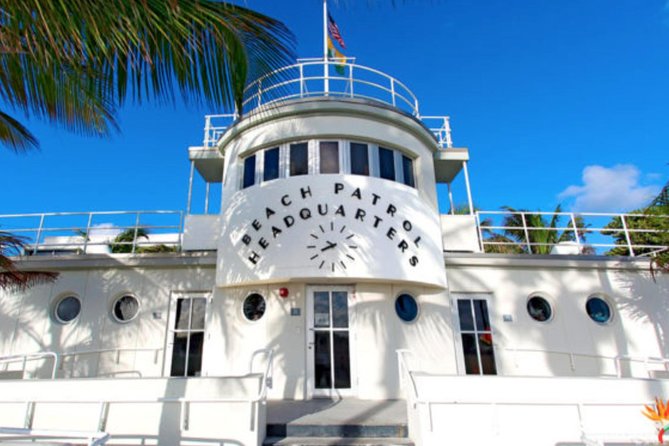
That brief stop gives you a useful orientation. Ocean Drive is not just a strip of restaurants and hotels. Its buildings show the clean lines, rounded corners, glass blocks, and decorative details associated with Miami’s Art Deco district. Even from a vehicle, you can begin to see how the city turned a particular architectural style into part of its public identity.
The Versace Mansion is viewed from outside as you pass. Do not expect an interior visit or a dedicated tour of the building. Its value here is as a recognizable Ocean Drive landmark and a prompt for discussing Miami Beach’s fame, luxury, and changing real estate scene.
Lincoln Road is also a pass-by. That means you can note its pedestrian-friendly design and commercial character, but you will not have time to shop or linger. If this is a priority for you, mark it as a place to return after the tour.
Two short stops add a different tone:
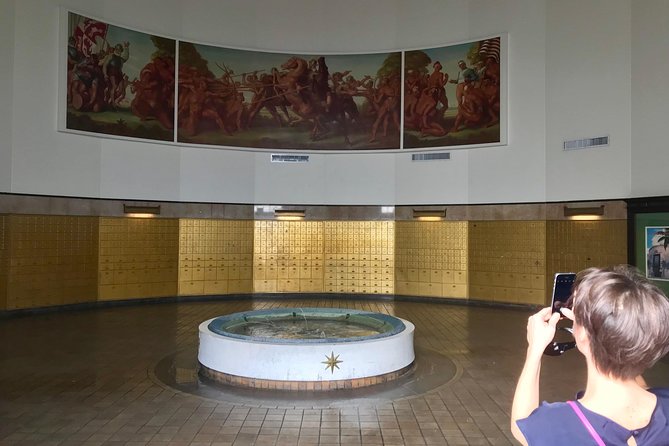
- The post office stop lasts about five minutes.
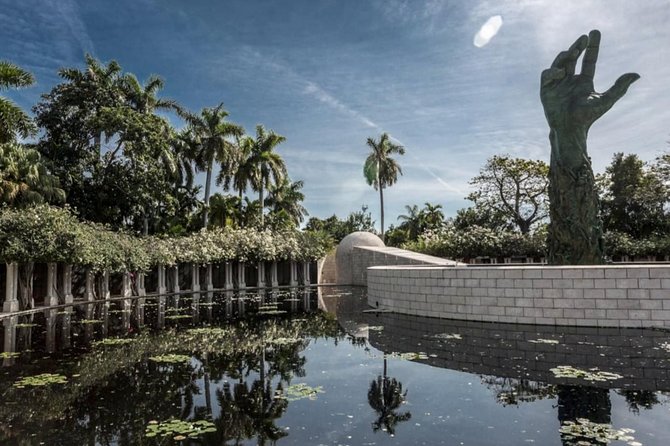
- The Holocaust Memorial stop lasts about five minutes.
These are quick pauses rather than full guided visits. The Holocaust Memorial provides a solemn counterpoint to the glamour of South Beach, and the short stop can help you decide if you want to come back for more time. Since the tour moves quickly, listen closely when your guide connects Miami’s buildings and neighborhoods to the people who built and reshaped them.
Wynwood and the change from graffiti to gallery-quality art
Wynwood is one of the most visually striking parts of the route. The tour includes about ten minutes in the district and also takes you toward its edges, which is important. The best way to understand Wynwood is not to see only its most photographed walls, but to notice how the neighborhood changes as you move outward.
Your guide explains the area’s evolution from graffiti to museum-quality street art. That shift raises useful questions about who gets to shape public space, how art can change a district’s reputation, and how quickly a neighborhood can change once it becomes a cultural destination.
Ten minutes will not allow you to see every mural or visit galleries at length. Still, it gives you a visual sample and some context. I would treat this as a preview. If you love large-scale murals, plan another visit with comfortable walking shoes and more time.
The private setup is especially helpful in Wynwood because you can ask about more than the walls directly in front of you. One detailed account of the tour praised Jon for discussing Miami’s art scene beyond Wynwood, as well as geography, ecology, and marine animals in Biscayne Bay. That range is useful because Wynwood works best when you connect its art to the wider city rather than viewing it as an isolated photo stop.
Downtown sights around Museum Park and Biscayne Bay
After Wynwood, the vehicle passes several downtown landmarks. These include the Opera House, Knight Concert Hall, Museum Park, the basketball arena, Freedom Tower, Bayside Marketplace, and Bayfront Park.
Most of these are drive-bys, so keep your expectations clear. You will see the general setting and hear interpretation from the guide, but you are not being given extended time inside the cultural venues or a full shopping visit at Bayside Marketplace.
This portion helps you read Miami as a working city, not only a beach destination. The performing arts buildings show the city’s cultural ambitions. Museum Park places major institutions near the bay. The basketball arena represents Miami’s sports culture, while Freedom Tower connects to the city’s immigration story and Cuban heritage.
Bayside Marketplace and Bayfront Park give you a sense of downtown’s public waterfront. If you are staying nearby, the guide can help you identify places worth returning to on foot. The private format also means you can ask for more explanation about a particular landmark instead of waiting for a group to move on.
A few more Miami bookings worth a look
- Little Havana Food and Walking Tour in Miami
★ 5.0 · 8,882 reviews - From Miami: Everglades Airboat, Wildlife Show & Bus Transfer
★ 4.2 · 8,622 reviews - Miami: Biscayne Bay Millionaire’s Homes Sightseeing Cruise
★ 4.5 · 7,348 reviews - Miami: Everglades National Park Airboat Tour & Wildlife Show
★ 4.5 · 7,296 reviews
Brickell Avenue Bridge and Miami Circle
The drive through Brickell adds a modern business district to the tour. You pass through the financial center and cross near the Brickell Avenue Bridge, with a short stop of about five minutes connected to Miami Circle and its Native American heritage.
This is a valuable contrast with South Beach. Instead of decorative hotels and seaside promenades, Brickell presents a more contemporary Miami shaped by offices, high-rise development, finance, and transportation links. The older cultural layer is easy to miss when glass towers dominate the view, which is why the mention of Miami Circle matters.
Again, this is not a long archaeological or museum visit. You get a quick look and interpretation from the guide. The stop works best for visitors who want to understand how several periods of Miami’s past exist close together, even when the newer city seems to cover them.
Causeway views and the ecology of the bay
One of the route’s scenic moments comes as you travel across an iconic causeway. The exact causeway is not specified, so you should see this as a moving viewpoint rather than a dedicated waterfront stop.
The value is the wider view. From the road, you can take in the relationship between Miami, Miami Beach, and Biscayne Bay while your guide explains the area’s history and ecology. This part gives the tour a welcome change of pace after the streets and buildings of downtown.
The ecological discussion is one reason a private guide can add value. Miami’s identity is tied to water, yet visitors often experience only the beach and hotels. Questions about marine animals in Biscayne Bay, environmental issues, and the city’s geography can make the view more meaningful.
Do not expect a long photo break or a boat ride. You will be seeing the bay from the vehicle. If weather, traffic, or road conditions affect the crossing, the experience of this section may vary.
Coconut Grove, Vizcaya, and the quieter side of the city
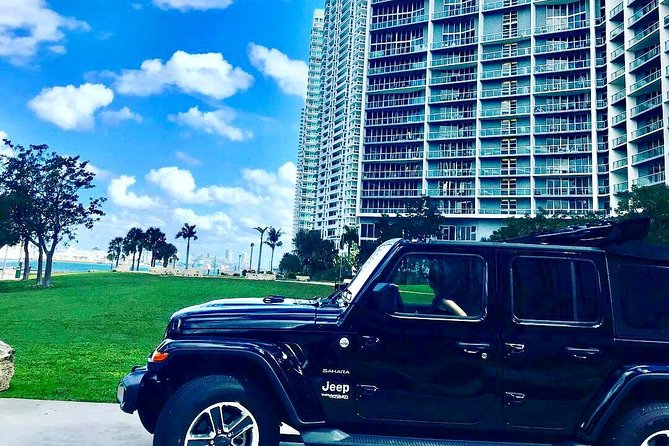
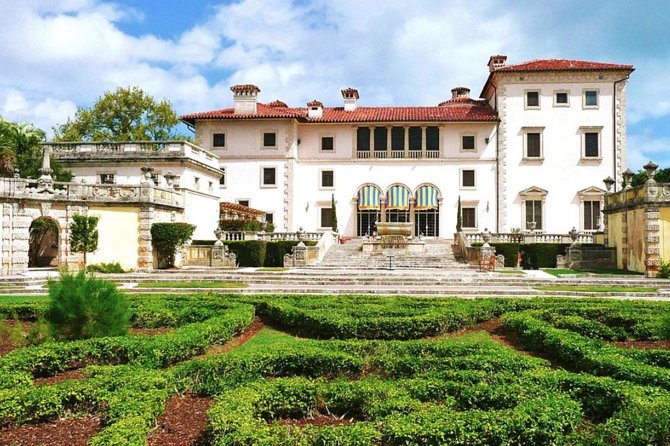
The route then passes Vizcaya Museum and Gardens, Kennedy Park, CocoWalk, the Playhouse, and Plymouth Congregational Church. This section introduces a different side of Miami, with older residential areas, cultural venues, parks, and landmark buildings.
Vizcaya is a major potential return visit. On this tour, you pass by rather than tour the house and gardens. That is useful for orientation, but it is not a substitute for admission and time on the grounds. If grand interiors, gardens, and detailed architectural study are high on your list, plan a separate visit.
Kennedy Park gives you another glimpse of the waterfront setting. CocoWalk and the Playhouse point to Coconut Grove’s shopping and cultural life, while Plymouth Congregational adds architectural and religious interest. The guide’s interpretation helps keep these from becoming a string of names. You can ask how the area differs from South Beach, Brickell, or Coral Gables.
Because this portion includes several drive-bys, it favors breadth. You see how Miami’s character shifts as you move away from the best-known tourist core. You will not have time to explore each place, but you gain a useful map of where to return.
Coral Gables, from waterways to Miracle Mile
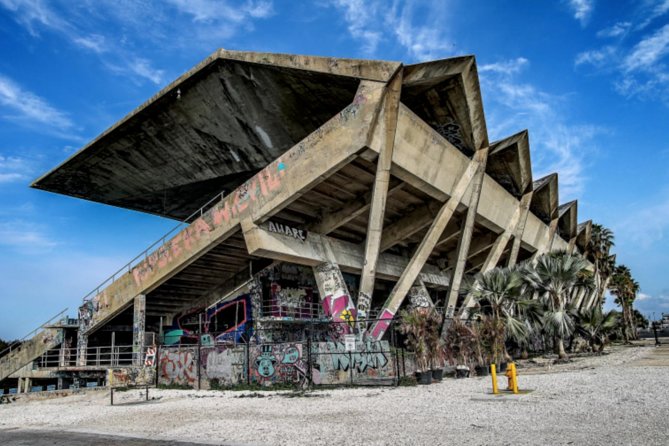
The final section passes the Gables Waterway, International Villages, the Biltmore Hotel, and Miracle Mile. Coral Gables brings planned streets, Mediterranean-influenced architecture, canals, and a more residential feel into the story.
The Biltmore Hotel is a strong visual landmark on this drive. You see it from outside, so the stop is about setting and architectural context rather than an interior visit. Miracle Mile adds a commercial district that feels distinct from both Lincoln Road and downtown Miami.
The Gables Waterway and International Villages broaden the picture further. They show how Miami’s development has not followed one single pattern. Some areas grew around beaches and tourism, others around business, planned neighborhoods, waterways, or immigrant communities.
This is also where the tour’s wide reach becomes clear. In about four hours, you have crossed from Miami Beach through downtown and Brickell, then continued toward Coconut Grove and Coral Gables. That coverage is the main reason to book this experience instead of spending the same time in one neighborhood.
What the private vehicle adds
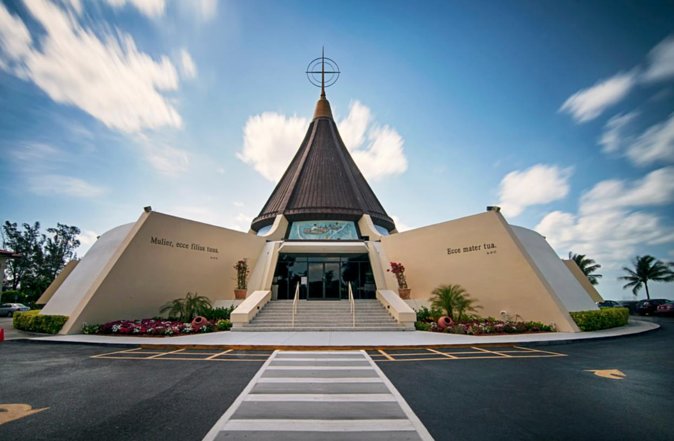
The tour is private, so only your group participates. That gives you more control than a standard city coach tour. You can ask follow-up questions, request more detail on architecture, or focus on subjects such as Cuban immigration, art, geography, or environmental concerns.
Transport is included from selected hotels, and hotel or port pickup and drop-off are listed as part of the experience. Airport and cruise ship pickups may need special arrangements, so contact the operator when booking if you are arriving or departing through either location.
For groups of up to four, transport is in a full-size SUV or a four-door or soft-top Jeep Wrangler, depending on availability. Groups of five to twelve use a full-size SUV or passenger van. The vehicle type can affect comfort and visibility, so confirm availability if that matters to you.
Bottled water is included. Food and drinks are not included unless specifically stated, so plan around the four-hour length. You are near public transportation, service animals are allowed, and most people can participate. If mobility is a concern, mention it in advance. One account praised Jon for taking care with three older people who were not very mobile, but the schedule still includes vehicle transfers and short stops rather than a fully accessible sightseeing program.
Is $293 per person a fair price?
At $293 per person, this is not a budget city tour. The price needs to be judged against what you receive: a private guide, private transport, hotel or port pickup from selected locations, bottled water, and a route that covers several distant districts.
For a small group that wants one guide and one vehicle, the price may make sense because you are paying for time, transport, and personal attention rather than only admission to a single attraction. Group discounts are offered, though the exact savings are not provided.
The value is strongest if you have limited time, are visiting from a cruise, have older relatives or children in your group, or want to ask a lot of questions. It is weaker if you prefer to walk slowly, spend hours inside museums, or explore one neighborhood in detail. Since food, drinks, and attraction admissions are not included, budget separately for any places you revisit after the tour.
Who should book this four-hour experience?
I would choose this tour for a first visit when I want Miami explained in broad strokes. It suits people who enjoy architecture, neighborhood contrasts, public art, local history, and city views more than people who want a single focused attraction.
It is also a good fit if you are arriving at the port, staying at a selected hotel, or trying to see several parts of Miami without organizing a complicated day of taxis and public transport. The private setting is helpful for families and small groups with different interests.
You should consider another type of outing if your main goal is a long South Beach walk, a full visit to Vizcaya, extensive time in Wynwood galleries, or a museum afternoon. Those places appear on the route, but several are seen only from the vehicle.
The guide can be multilingual, while English is the stated offering. If you need another language, confirm it before booking rather than assuming it will be available.
Cancellation and booking details
You receive confirmation when you book. Free cancellation is available if you cancel at least 24 hours before the start time. Cancel within 24 hours, or make changes during that period, and you will not receive a refund.
The tour is provided by Tons of Fun Tours and Rentals. Airport and cruise port pickups may require special arrangements, so contact the operator at booking with your exact location and timing.
Should you book it?
Book this tour if you want a private, citywide introduction that links Miami’s architecture, neighborhoods, immigration story, street art, and waterfront setting. Its strongest feature is the combination of personal guiding and transport. Jon’s ability to move from architecture to Cuban immigration, art, environmental concerns, and Biscayne Bay makes the experience especially useful for curious visitors who like to ask questions.
Skip it if you want long visits inside landmarks or a slow walking tour. Four hours is enough to get your bearings and spot places for a return visit, but not enough to explore every stop. For a first day in Miami, a cruise stop, or a group that values convenience and context, the price can be justified. For detailed sightseeing, use this as your introduction and save another day for the places that catch your attention.
FAQ
How long does the Miami architecture tour last?
The tour lasts approximately four hours.
Is this a private tour?
Yes. Only your group participates in the activity.
Is hotel pickup included?
Hotel pickup and drop-off are included from selected hotels. Hotel and Miami port pickup and drop-off are also offered.
Can I be picked up at the airport or cruise port?
Airport and cruise ship port pickups may require special arrangements. You should call or email the tour operator when booking to confirm the details.
What type of vehicle is used?
Groups of up to four use a full-size SUV or a four-door or soft-top Jeep Wrangler, depending on availability. Groups of five to twelve use a full-size SUV or passenger van.
Are food and drinks included?
Bottled water is included. Food and other drinks are not included unless specifically stated.
What is the cancellation policy?
You can cancel at least 24 hours before the experience starts for a full refund. Cancellations or changes made less than 24 hours before the start time are not accepted and are not refundable.
Fresh reviews out of Miami
- Miami’s Best Views: Private Boat Tour★ 5.0 · 3 reviews
- Jetcar Experiences★ 5.0 · 3 reviews
- Palm Beach Tour from Miami – Flagler’s Museum + Hotel Breakers★ 5.0 · 3 reviews
- Miami: Private Yacht Rental Tour with Dolphins and Snorkel★ 4.9 · 3 reviews
- Hollywood Meets Miami Beach Movie and Tasting Tour★ 5.0 · 3 reviews
- Miami: Everglades National Park Hiking and Kayaking Day Trip★ 5.0 · 3 reviews
- Miami: 30-Minute Private Helicopter Tour with Champagne★ 5.0 · 3 reviews
- Little Havana French Gourmet Guided Tour★ 5.0 · 3 reviews
Historical Tours, compared.
History Museum, Pioneer House Museum & Schoolhouse Museum
Read our review →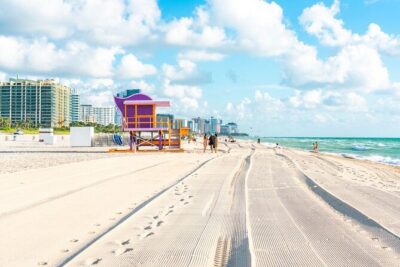
Award-winning Art Deco & History Walking Tour in Miami Beach
Read our review →
Miami Beach Art Deco & History Bike Tour with Design Enthusiast
Read our review →
Food Tour of Historic West Palm Beach Neighborhoods
Read our review →
Miami Small Group Boat Tour: History, Wildlife, and Stiltsville
Read our review →
Fort Lauderdale History and Sightseeing Tour on Electric Bike(s)
Read our review →
Browse the lists this tour appears in